ServicesStorm Damage Repair
Storm Damage Repair in Jacksonville Beach, Built to Code
After a hurricane or a hard summer squall, we check your roof for free, photograph what the wind and rain did, and work with your insurance adjuster. Then we pull the permit and make the repair to current Florida code, so the fix holds through the next blow.
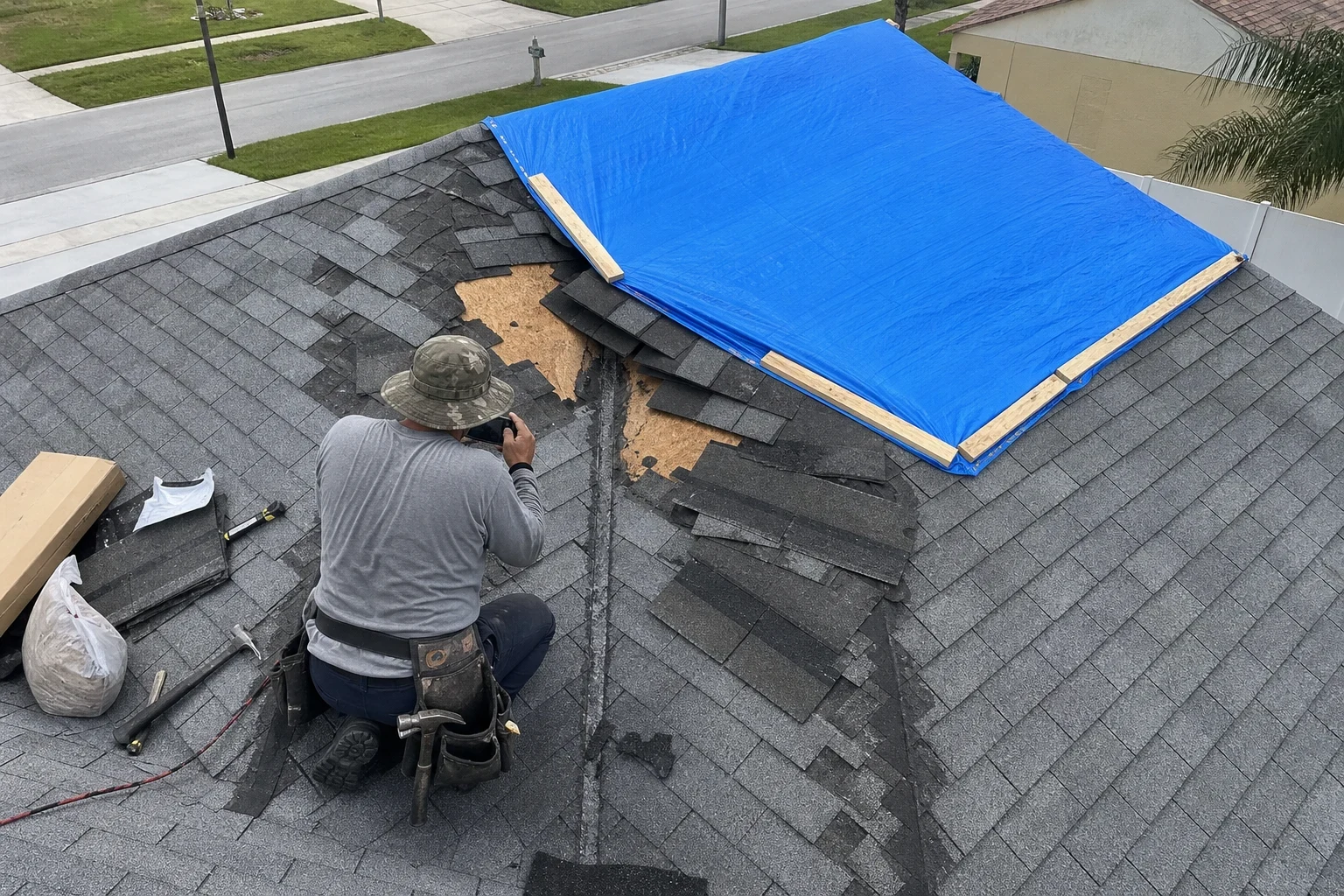
What counts as storm damage and when to call
Wind, rain blown sideways, hail and falling branches can all damage a roof. Sometimes it's obvious, with shingles strewn over the grass. Often it isn't. A shingle can lift, lose its seal and settle back so it looks fine, and then the next storm rips it off.
We repair what can be repaired and say so plainly when a section, or the full roof, has to be replaced. The state building code says that when enough of a roof section is damaged, the whole section must meet current standards rather than get a patch. You'll know where your roof falls on that rule before you sign, so the scope your insurer reviews matches what the inspector will look for.
Around here, most storm repairs require a permit. We file it, book the inspection and handle the code questions for you.
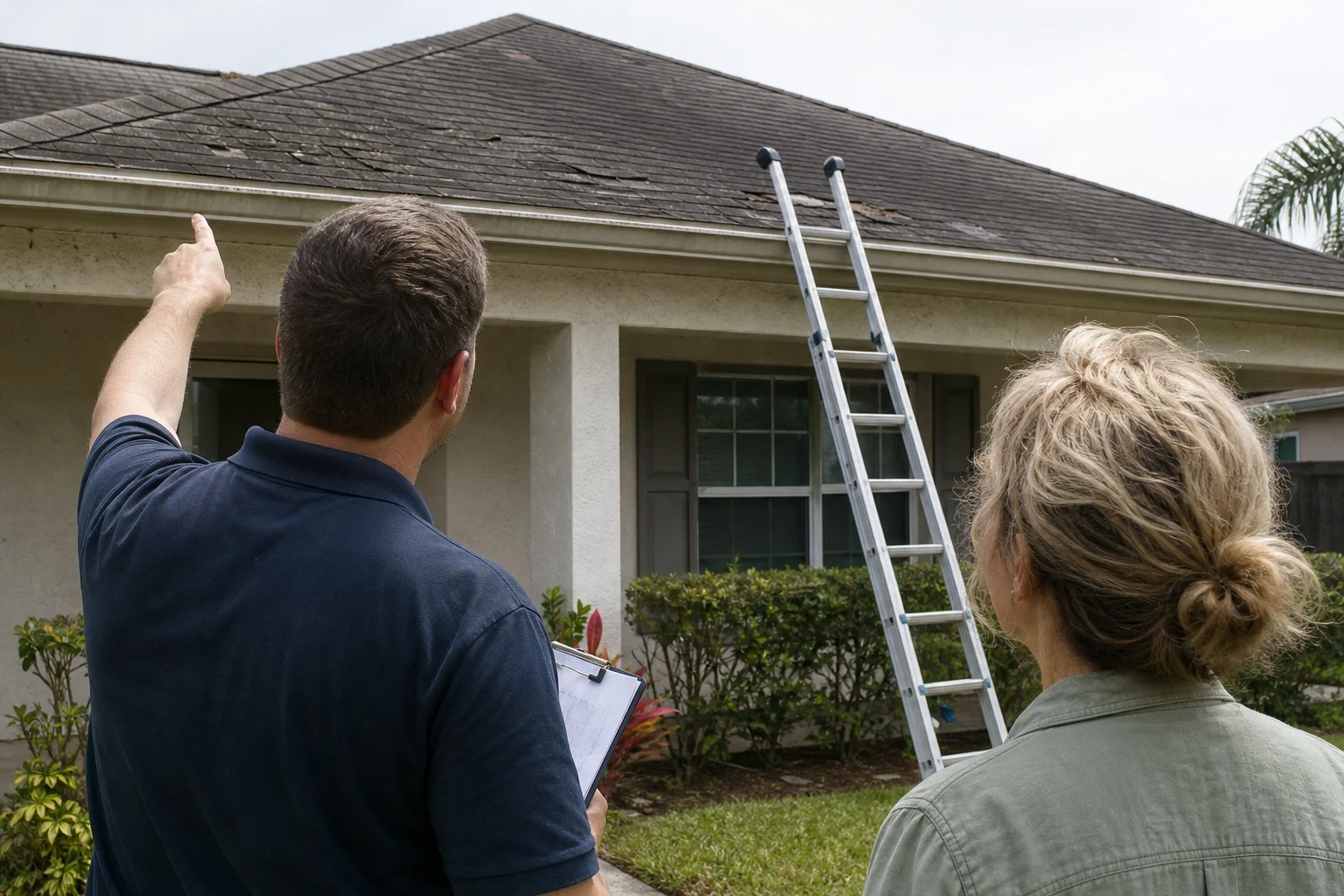
What our storm repair work includes
- 01
A free first visit after the storm
Our post-storm inspection costs you nothing. We go up on the roof, then into the attic to look for damp decking or new water marks. Flashing, vents, ridge caps and roof edges all get a close look, and every problem we find gets a photo.
- 02
Help with your adjuster
On storm damage claims, we deal with your insurance adjuster ourselves. We can meet them at your home, show them the damage and hand over our photos. The adjuster decides the claim. We just make sure nothing on the roof gets missed.
- 03
Tarping while the claim moves
If water can get in before the repair is scheduled, we tarp and fasten the damaged area so your home stays dry.
- 04
Repairs done to current code
New shingles go down with the nailing pattern and edge fastening the code calls for in high-wind areas. Where decking is exposed, we renail it to code and put down the required underlayment before anything goes on top.
- 05
Flashing, vents and gutters
Wind loosens flashing at walls and chimneys and pops off vent caps. We reseal or replace them. If gutters got bent or pulled loose, we can fix those on the same visit.
- 06
Final inspection and sign-off
We handle the paperwork with the building department and meet the inspector when the work is checked. You keep a copy of the sign-off for your records and your insurer.
Questions about Storm Damage Repair?
Call(904) 822-0790Signs your roof took storm damage
Shingles or ridge caps on the ground
Any roofing in the yard means there is an open spot up top. Even one missing shingle lets wind-driven rain reach the decking.
Creased or lifted shingles
A straight crease across a shingle means it bent in the wind and the seal let go. It may still be on the roof, but it won't hold next time.
New ceiling stains or a musty attic
Brown rings on the ceiling or a damp smell in the attic after a storm point to water getting past the shingles or flashing.
Granules piled at the downspouts
Hail and heavy rain knock the gritty coating off shingles. A pile at the bottom of a downspout means the shingles lost some of their protection.
Dents or loose metal
Dented vents, bent drip edge or flashing that lifts in the breeze are easy to miss from the ground. On a metal roof, look for loose panels or popped fasteners.
Limbs on the roof
A branch can crack decking even when the shingles look whole. Have it checked before it gets dragged off.
How a storm repair job runs
- 1
Inspection and photos
We go over the roof and attic and photograph each trouble spot. Back on the ground, we go through the pictures with you and say what can be repaired and what can't.
- 2
Meeting the adjuster
If you file a claim, we meet your adjuster on site and walk the damage together. We point out code items that affect the scope, like how much of a section has to be redone.
- 3
Written estimate and permit
You get a written estimate with each item listed. Once you say go, we file for the permit and set a work date.
- 4
Repair day
We cover plants and protect the driveway, tear off the damaged material and check the decking underneath. The repair goes on to code. We clean up and run a magnet over the yard for nails.
- 5
Inspection and closeout
The building inspector checks the work. We send you final photos and the paperwork your insurer may ask for.
What moves the cost of storm repair
We price storm work only after we've been on the roof and seen the damage. Many storm repairs are paid largely through a homeowner's insurance claim, less the deductible, but that depends on your policy. For work that isn't covered, financing is available.
- How much of the roof is damaged
- A few torn shingles is a small job. Damage across a large part of a roof section can trigger the code rule that the whole section be brought up to current standards.
- What's under the shingles
- Wet or soft decking has to be cut out and replaced. Nobody can see it until the shingles come off, so your estimate spells out how rotted boards get priced if they turn up.
- Roof material and matching
- Shingle, tile and metal each repair differently. Older shingles may be discontinued, and finding a close match or replacing a full slope changes the price.
- Fees and code upgrades
- Building department fees and items the current code requires, like added fasteners or a new underlayment, are part of the cost. Insurance policies often cover required code upgrades, but check yours.
- Pitch and access
- Steep roofs and tight lots take more safety gear and more time.
Storm questions homeowners bring us
Should I call my insurance company before you look at the roof?
Either order works. Many people call us first so they understand the damage before they talk to anyone. Our post-storm inspection is free, and it gives you photos to share with your insurer. If the damage comes in under your deductible, you might decide a claim isn't worth filing.
Is my insurance going to cover the repair?
That comes down to your policy and the adjuster's findings. Most policies pay for sudden wind or hail damage and exclude wear from age. The claim decision isn't ours, but we work with your adjuster directly so they see both the damage and what code requires.
Why do storm repairs need a permit?
Most roof work in Florida needs one so an inspector can check it against the building code's wind and water rules. Skipping that sign-off can come back to bite you on a later claim or a home sale. We take care of the filing and the inspection.
Will the new shingles match the old ones?
We do our best. When your shingle is still in production, a match is easy. When it's been discontinued, we lay out the nearest choices, and redoing a whole slope is sometimes the neater answer.
How quickly after a storm should someone check my roof?
As soon as the weather has passed and it's safe. Even small gaps let water soak into the decking, and many insurers set deadlines for reporting damage. Please don't climb up yourself. Leave the ladder work to us.
Do you do storm repairs beyond Jacksonville Beach?
We do, in Atlantic Beach, Neptune Beach, Palm Valley, Sawgrass and Nocatee as well. You get the same free inspection and the same process there.
Get your roof checked after the storm
We'll look over the roof for free, show you the photos and tell you plainly what the code will ask for. You decide what happens next.