ServicesRoof Replacement
Roof Replacement in Jacksonville Beach, Built to Code and Inspected
When the old roof is past patching, we tear it off to the deck and build a new one to current Florida code. We pull the permit, meet the inspector and clean up before we leave. You get a roof that passes and the paperwork to prove it.
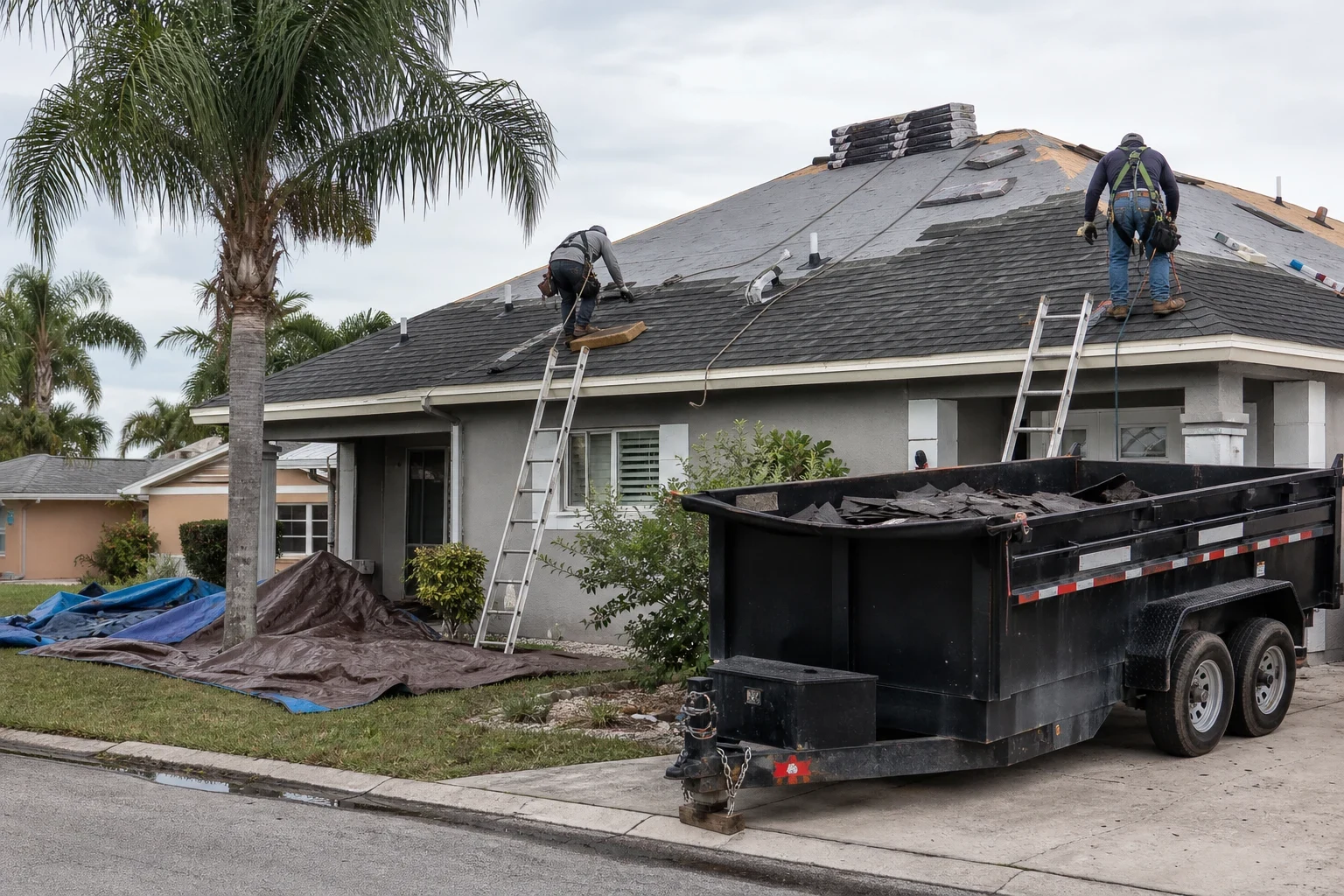
When a New Roof Is the Right Call
A new roof makes sense when the old one has stopped working across the whole surface, not in one spot. Brittle, bare shingles, soft decking and leaks that keep turning up in new places are the usual signs. If the problem is limited, our roof repair page is the better place to start, and we will tell you that on the roof.
In Florida, a reroof needs a permit before any work starts. The state building code sets how the deck is nailed, what goes under the shingles, how the edges are fastened against wind, and how flashing and vents are done. We file the paperwork, build to that code and stay with the job through every inspection the city requires.
What you end up with is simple. A dry house, a roof built to hold in high wind, and a passed final inspection on record that you can hand to your insurer or a future buyer.
What a Roof Replacement Includes
- Permit and paperwork
- We apply with the building department and file a notice of commencement when the job calls for one. The posted card stays where the inspector can see it.
- Full tear-off to the deck
- Old shingles and underlayment come off down to the wood. We don't lay new shingles over old ones, so nothing is hidden under your new roof.
- Deck repair and re-nailing
- Soft or rotted sheathing gets cut out and replaced. Then the whole deck is fastened to the nailing pattern current code calls for. That nailing is a big part of what keeps a roof on in a hurricane.
- Underlayment, flashing and edges
- Code-approved underlayment goes down first, then new drip edge and new flashing at walls, chimneys and pipes. Close to the ocean we use corrosion-resistant fasteners and metal, because salt air eats plain steel.
- Attic ventilation check
- We look at your intake and exhaust vents and correct what's out of balance. A hot, stuffy attic cooks shingles from underneath.
- Cleanup and final walk
- Debris is hauled off and the yard and driveway get a magnet sweep for nails. Once the final inspection is signed, we walk the house with you.
Signs Your Roof Needs Replacing
Grit piling up in the gutters
That sandy coating on a shingle is what shields it from the sun. When your gutters fill with it, or it fans out in a dark stain below a downspout, the asphalt underneath is being baked bare.
Curling, cracked or missing tabs
Lifted edges let wind get underneath. When it's happening on several slopes, patching turns into chasing.
Ceiling stains in several rooms
A single drip is often something we can fix. When stains show up in two or three rooms at once, the roof is usually worn out as a whole.
Soft spots or a sagging line
If the roof gives underfoot or the ridge dips, the decking below is likely wet or rotted. That has to be opened up and replaced.
Your insurer is asking questions
Many Florida carriers look hard at older shingle roofs at renewal. A free estimate gives you real facts about your roof's condition to work with.
Widespread wind damage
If a storm lifted shingles all over the roof, start with a free post-storm inspection. Our storm damage repair page covers how that works with a claim.
What Sets the Price of a Replacement
We quote a roof after standing on it, never off a satellite image. Each part of the job gets its own line so you can see where your money goes. Here's what changes the total the most.
Size and pitch
Each added square of roof means more shingles, underlayment and labor. Steep roofs need fall protection and footholds set up first, and the work goes slower.
Shingles or metal
Architectural shingles and metal differ in upfront cost and in how long they last. Our metal roofing page walks through how they compare.
State of the decking
Rotted sheathing stays hidden until tear-off. Your estimate spells out how any replaced decking is charged, so a bad board never becomes a surprise on the bill.
Bringing it up to code
Older roofs were often built under an earlier code. Updating the nailing, edge metal, underlayment or vents to current rules is part of the work and is listed on the estimate.
Old layers and site access
A roof with two old layers takes longer to strip and haul away. Small lots, big trees and fenced yards can also add time.
How the Job Runs
- 1
Free estimate on the roof
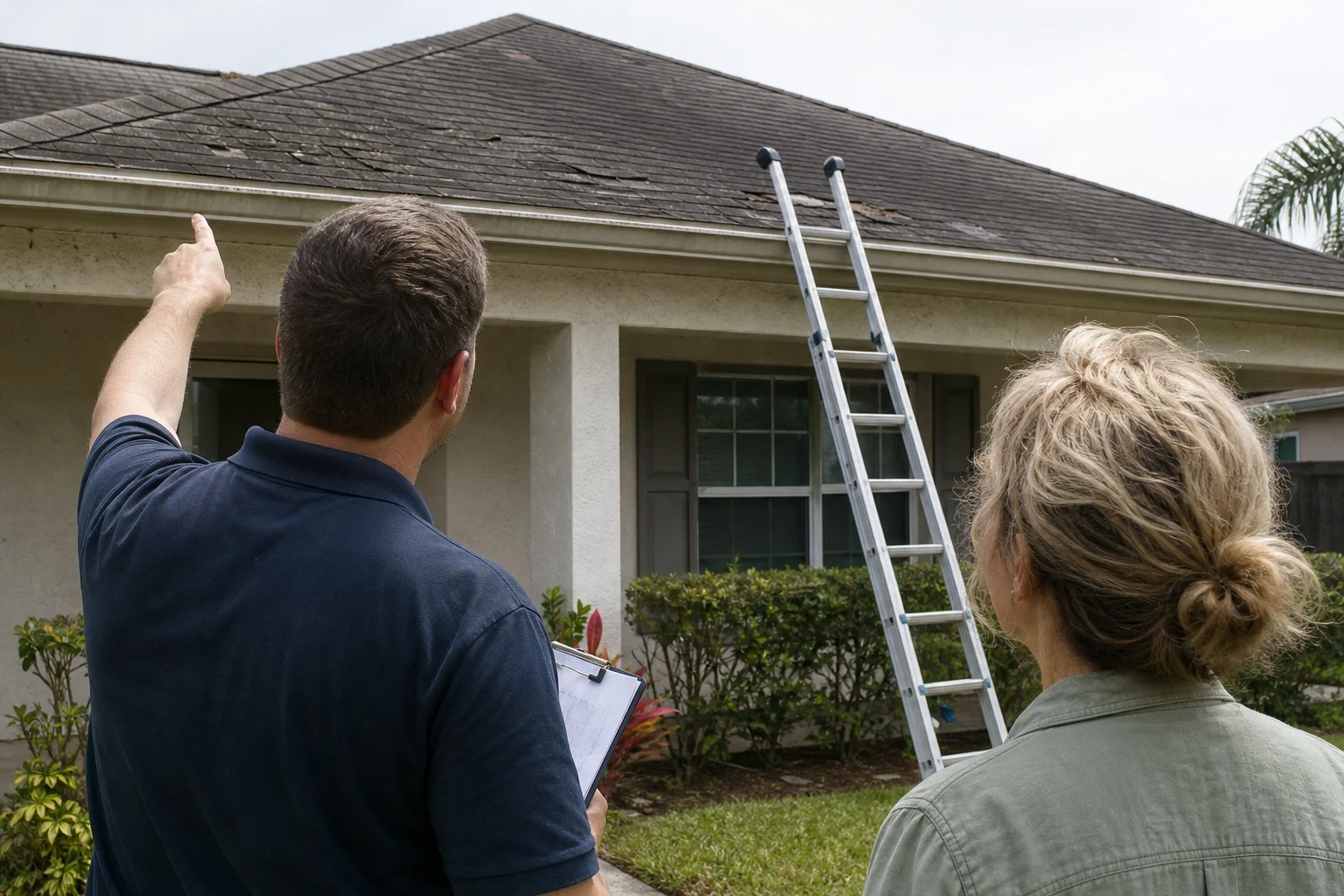
We get on the roof, check the deck from the attic where we can, measure and take photos. You get a written, line-by-line estimate and a straight answer on whether repair would do instead.
- 2
Paperwork and start date
We file with the building department and pick a start date with you. Financing is available if you'd rather spread out the cost, and we can go over it on the call.
- 3
Tear-off and deck work
Tarps go over plants and along the walls first. We only strip what we can dry in that same day, so your home is never left open overnight. Bad decking is replaced and the deck re-nailed.
- 4
New roof and inspections
Underlayment, flashing, vents and the new shingles or metal go on. The inspector checks the work at each stage the city requires, and we're there to meet them.
- 5
Final sign-off and cleanup
After the final inspection passes, we sweep, haul off the last of the debris and give you the inspection records for your files.
Roof Replacement Questions
Do I need a permit to replace my roof?
Yes. A full reroof in Florida needs one, along with city inspections. We apply, post the card and schedule each inspection. A roof done without that approval can cause trouble with insurance and when you sell.
Can you just put new shingles over the old ones?
We don't. Going over old shingles hides soft decking and keeps us from re-nailing the deck to current wind standards. A full tear-off is the only way to know what's under there.
Will a new roof lower my homeowners insurance?
It might, but we can't promise it. Many Florida insurers give credits for wind-resistant features, which a wind mitigation inspection documents. Ask your agent what your policy rewards before the job starts, and we'll build with that in mind.
How long will the work take?
Most single-family roofs take a few working days on site. Rain, the inspection schedule and the amount of rotted decking can stretch that. We'll give you a realistic timeline with your estimate and call you if it shifts.
Should I stay home while you're working?
You don't have to be here all day, but keep your phone close in case we find something. Park your cars on the street and pull framed pictures off upstairs walls, because tear-off rattles the house. Pets do best indoors, away from the noise and the ladders.
Will insurance pay for a new roof after a storm?
When a storm is what ruined the roof, your policy may cover some or all of it. We deal with the adjuster directly on the claim and walk them through our photos and measurements. The coverage decision is theirs to make, not ours.
Get a Straight Answer on a New Roof
We'll climb up, check the deck from the attic and say plainly whether replacement is really needed. The whole job goes on paper, and the estimate costs you nothing and commits you to nothing.