Jacksonville Beach, FL
Jacksonville Beach Roofing, Inspected and Signed Off Start to Finish
We replace and repair roofs, check them after storms, hang gutters and install metal roofing on homes in Jacksonville Beach, Neptune Beach and Atlantic Beach. We pull the permit, meet the building inspector at your home and tell you in plain words what the code asks for and why.
- Free, no-obligation estimates
- City sign-off handled
- Financing available
- We work with your adjuster
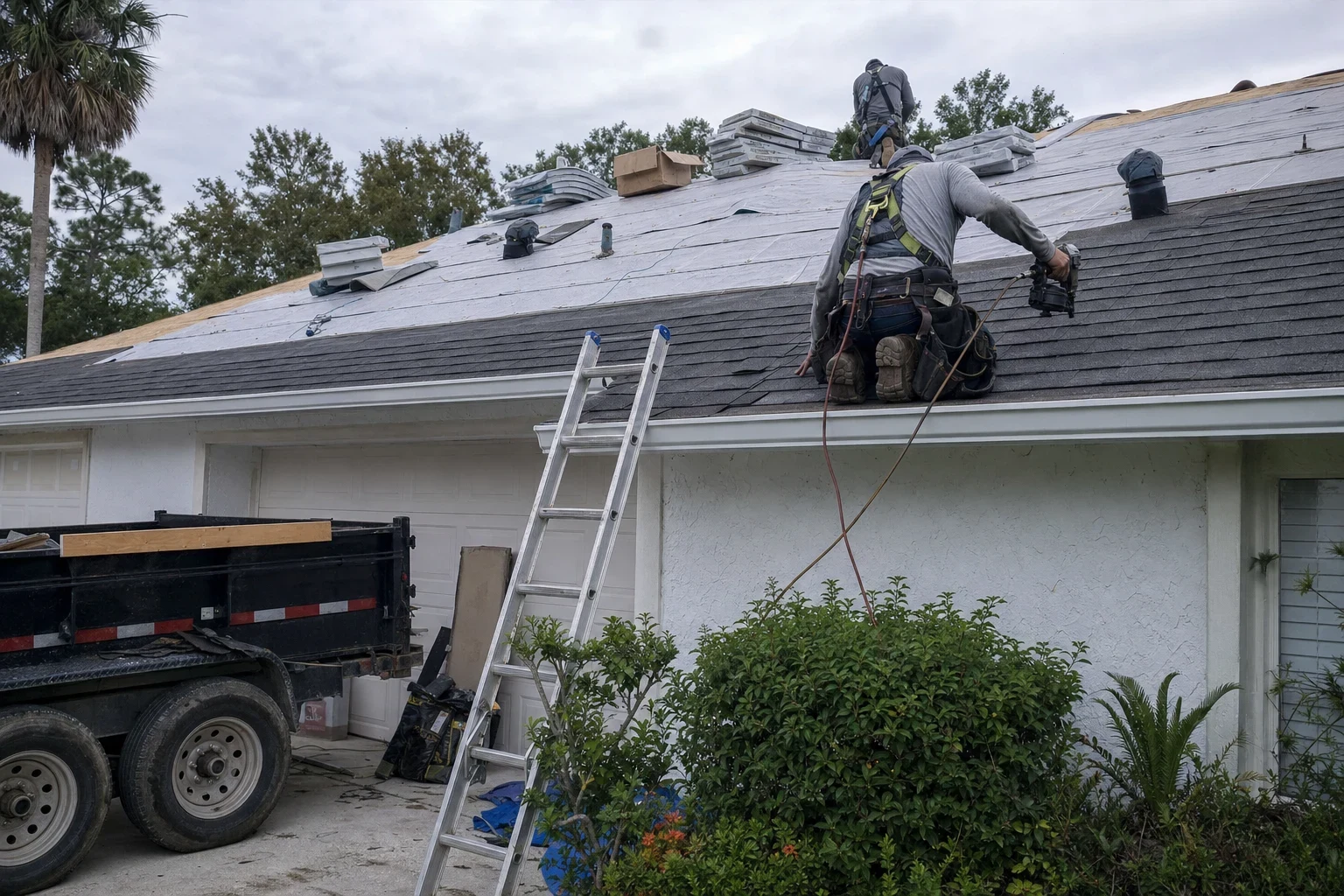
Roofing Work We Do
We stick to roofs and what drains them: roof replacement, roof repair, roof inspections, storm damage repair, gutters and metal roofing. Jobs that need a permit get one, filed in our name. If a small fix doesn't need city paperwork, we tell you that too. Pick a service below to see how that job runs.
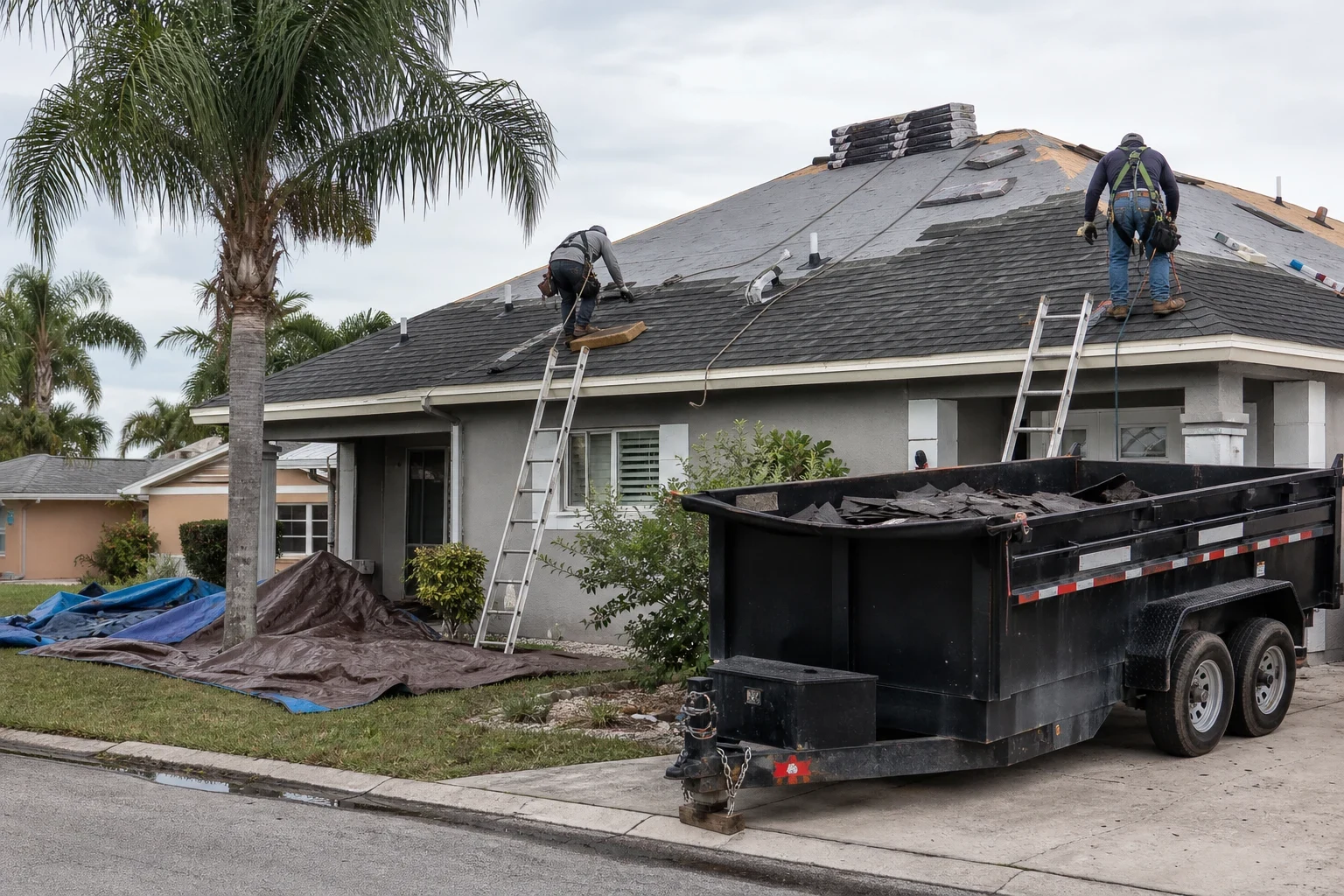
Roof Replacement
A full tear-off and new roof, built to the Florida Building Code, with the city paperwork and inspections handled for you.
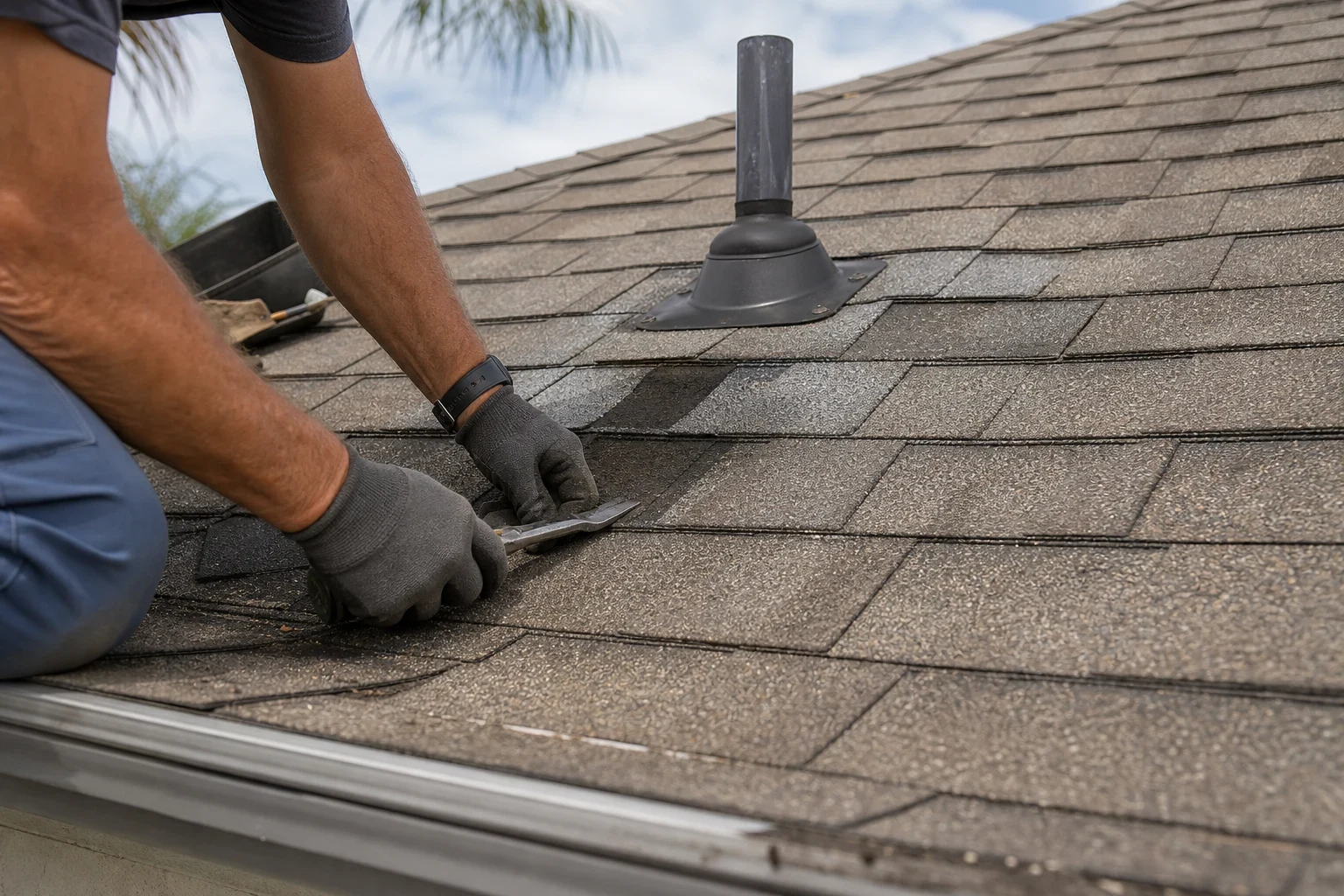
Roof Repair
We trace leaks and fix shingles, tile, flashing and soft decking to current code, and we file the paperwork when your repair calls for it.
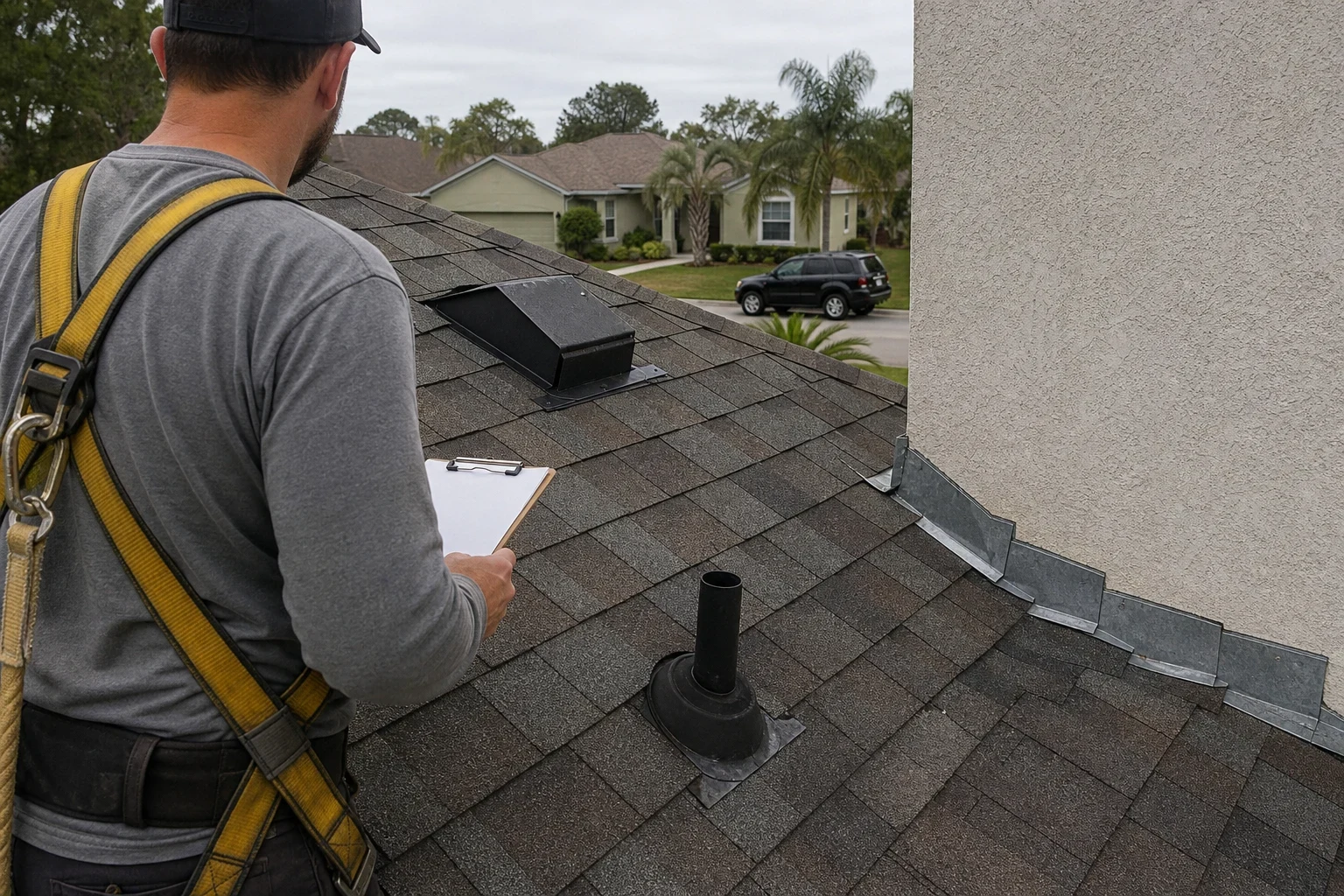
Roof Inspections
A full look at your roof, attic and flashing, with photos and a plain list of what meets code, what's wearing out and what can wait.
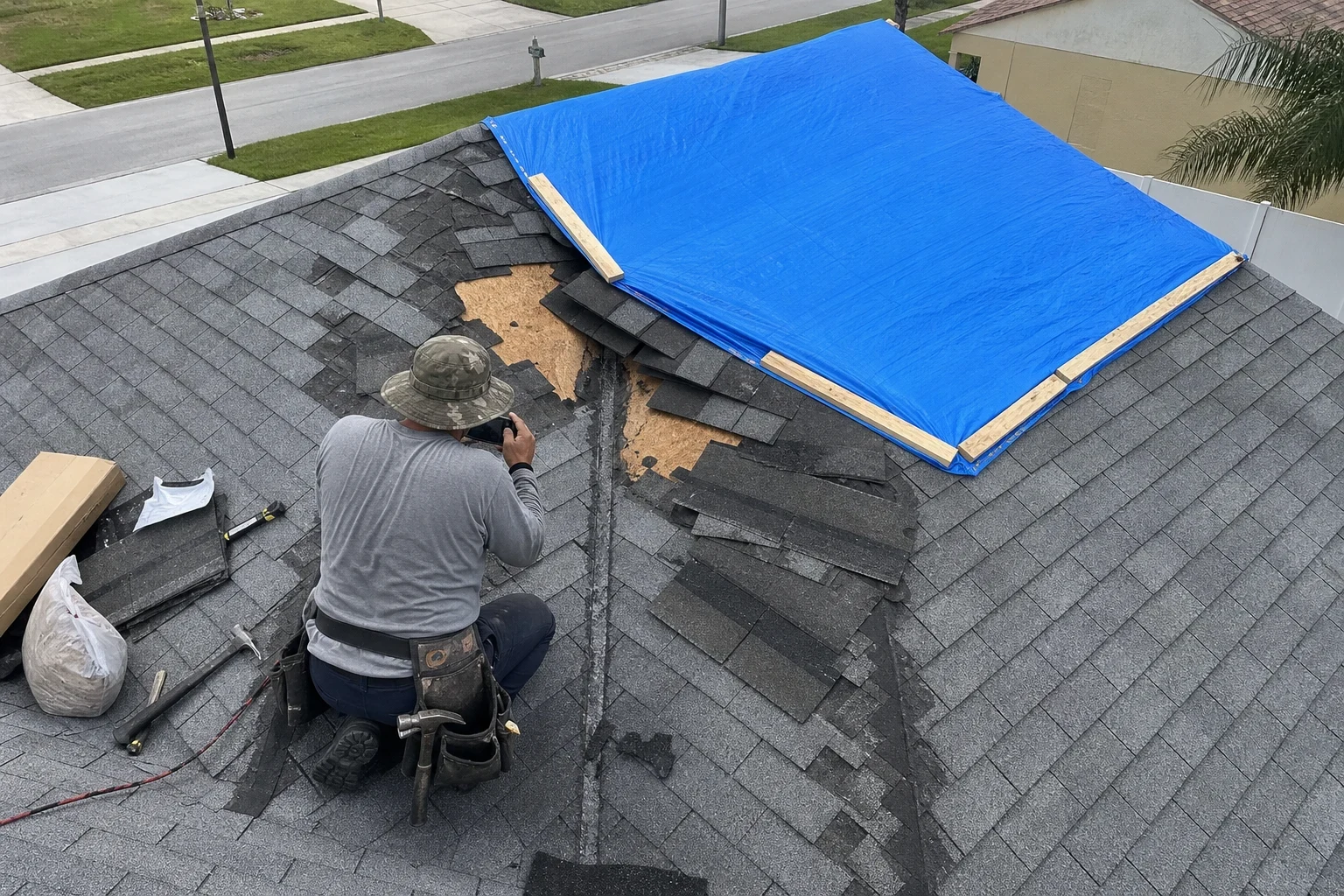
Storm Damage Repair
Free post-storm roof checks, photos your adjuster can use, and storm repairs finished to current Florida code with the inspection handled for you.
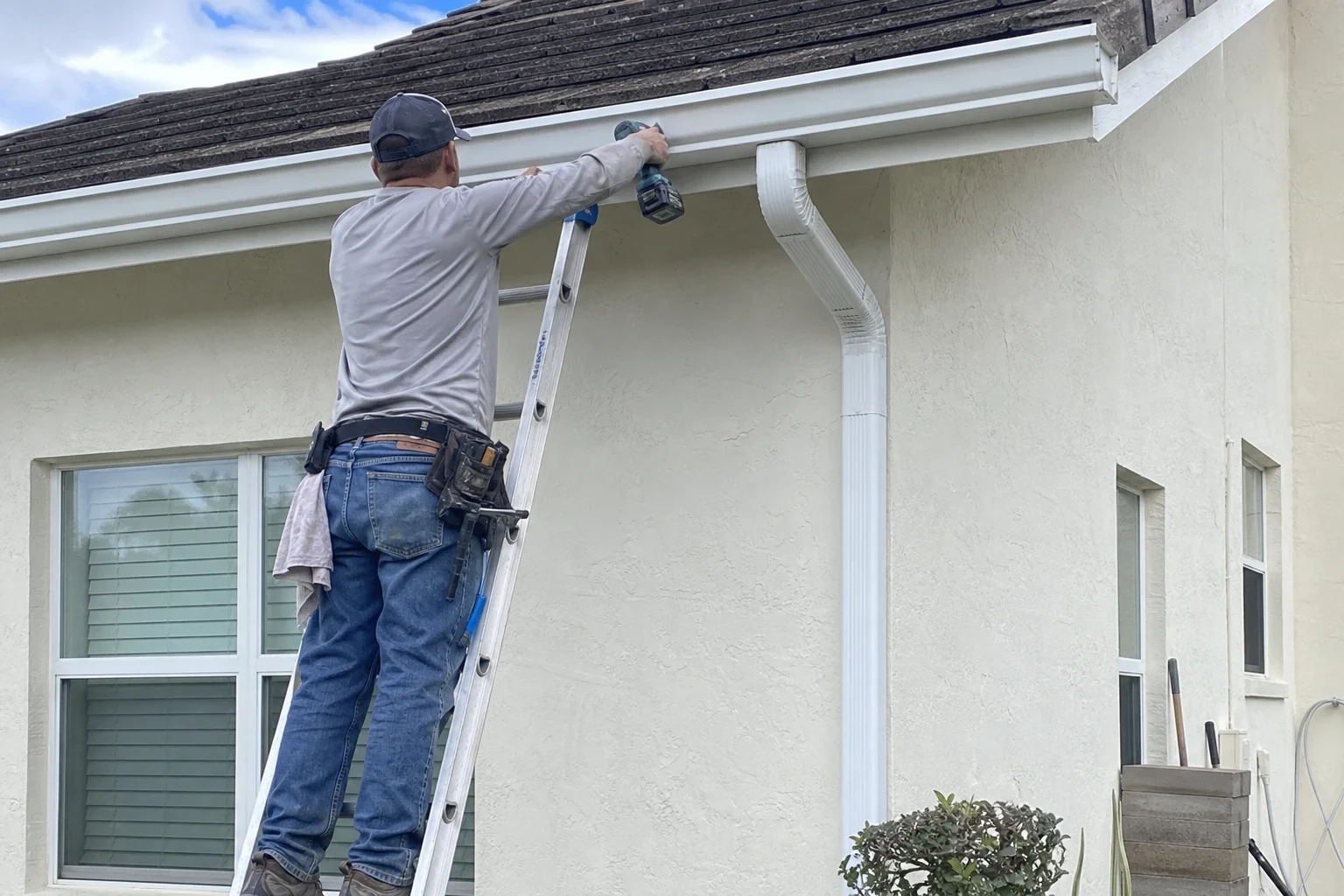
Gutters
Gutters and downspouts sized for heavy rain, hung with salt-resistant fasteners and tied into your roof edge the right way.
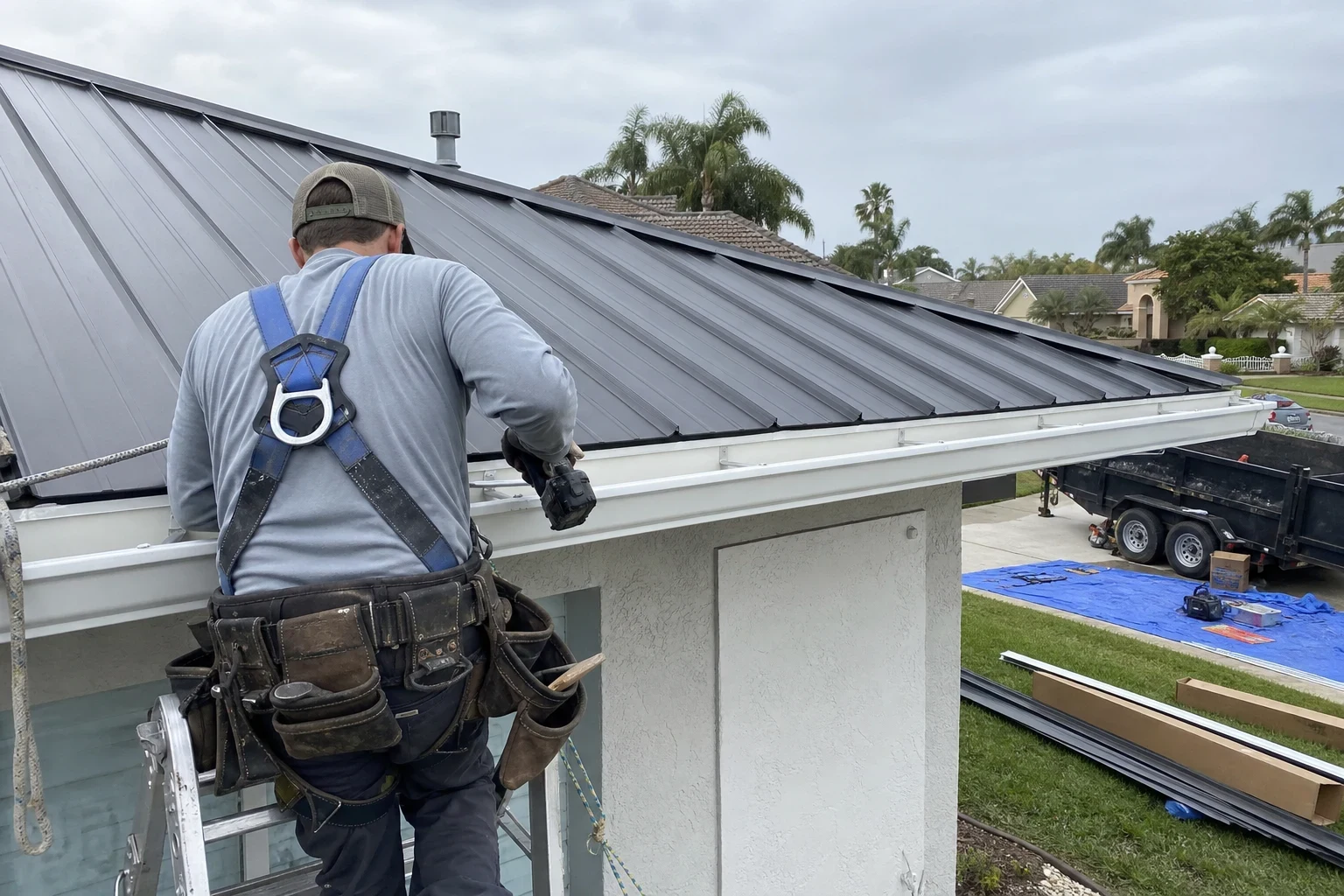
Metal Roofing
Standing seam and 5V crimp metal roofs, with metal and fasteners chosen for salt air and every code item explained before work starts.
Where We Work
We're based in Jacksonville Beach and work on homes up and down the beaches and just inland. That includes Atlantic Beach, Neptune Beach, Palm Valley, Sawgrass and Nocatee. If you're close by and don't see your town, ask when you call.
- Jacksonville Beach
- Palm Valley
- Atlantic Beach
- Neptune Beach
- Sawgrass
- Nocatee
Paperwork goes to different offices depending on whether your home sits in one of the beach cities or in St. Johns County. We know which office covers your address and file with that one.
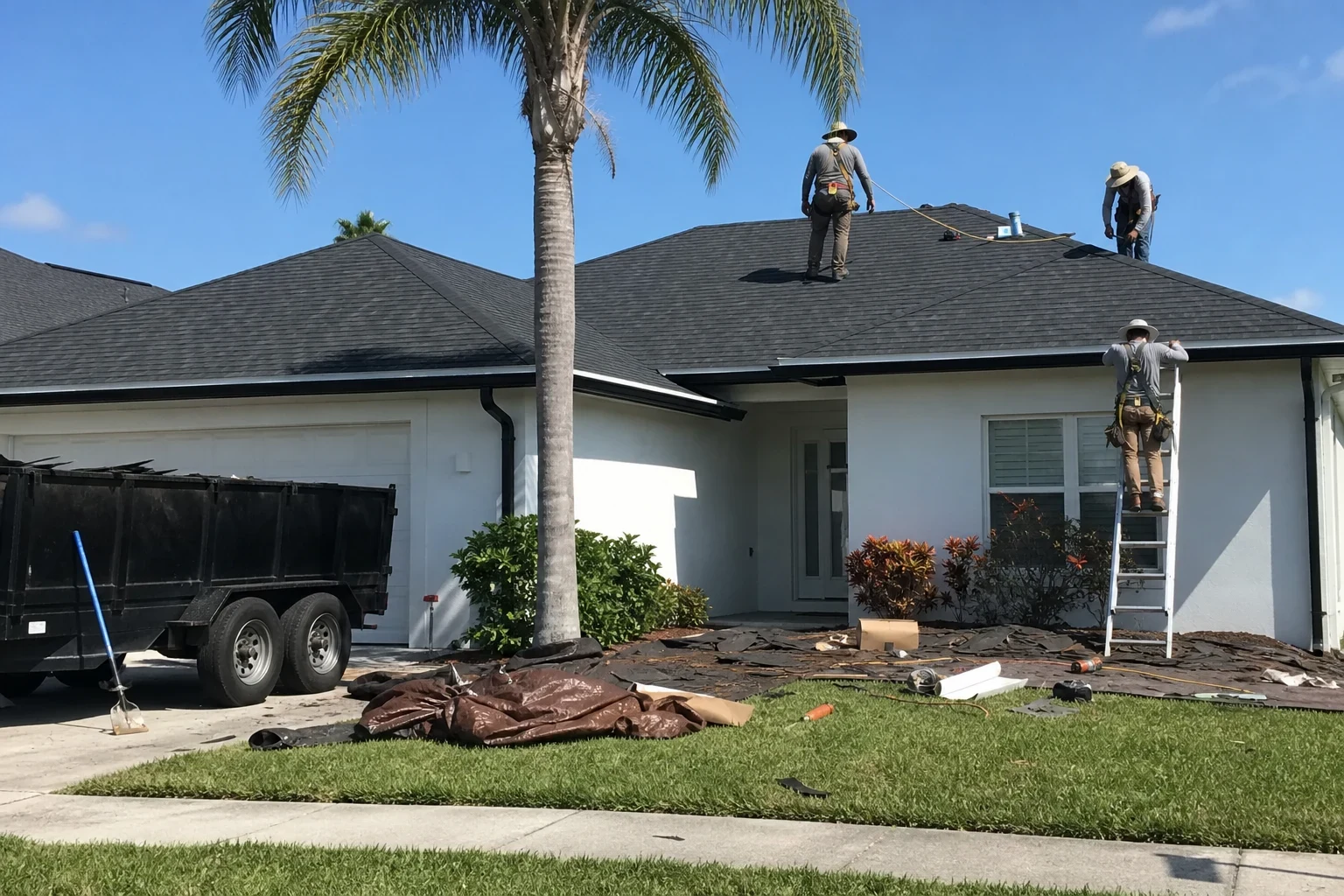
About Our Company
We're a roofing company that works on houses near the coast, and roofs are all we do. Most of our work is roof replacement and repair, with storm checks, gutters and metal roofs filling in the rest.
We put the code and the inspections at the center of every job because that's what protects you. A roof that passed its final inspection has a public record behind it. That matters when you file a claim, when your insurer asks how old the roof is, and when you sell your home. We'd rather explain a code item in your driveway than have you hear about it from an inspector or an underwriter later.
- In business
- In business since 1995
- Certifications
- GAF Certified Installer
What Drives the Cost of a Roof
No two roofs cost the same, and we won't guess a number over the phone. The price comes from what's on your house now and what code requires once the old roof comes off. Here are the main things that move it.
Every estimate is free and broken out line by line, including fees and code items. If bad decking shows up at tear-off, you get photos and the per-sheet price before we replace anything.
- Roof size and steepness
- More roof means more shingles or panels and more working days. On a steep roof the crew stays tied off on roof jacks and moves slower, so labor goes up.
- Layers to tear off
- One layer strips faster than two. Code won't let new shingles go over a roof that was already covered once, so every added layer means more tear-off time and dump fees.
- Condition of the deck
- Soft or rotted plywood has to be swapped out before the new roof goes on, and you often can't see it until tear-off. Salt air and summer storms are toughest on the deck at the eaves and valleys.
- Metal or shingles
- Standing seam metal and architectural shingles differ in price and in how long they last. If metal suits your home, you get a quote for each.
- Code requirements
- Current code may call for a sealed deck or secondary water barrier, new drip edge and flashing, and more fasteners than the old roof had. These aren't extras you can skip, and each shows up on its own line.
- Fees and access
- Building fees vary with the office that covers your address. Tight lots, fences, pools and plantings close to the house can lengthen setup.
How a Roof Job Runs, Step by Step
This is a roof replacement from the first phone call to the final sign-off. Repairs follow the same idea on a smaller scale.
- 1
Free roof check
One of our crew gets up on the roof, checks the shingles, flashing and vents, looks in the attic if we can get in, and takes photos of anything important. Then we tell you whether a repair will last or the roof should be replaced, and the reason.
- 2
Estimate on paper, then the permit
You receive a written estimate with each item listed. Once you sign, we file for the permit with the building department and call you to agree on a start date.
- 3
Tear-off and a solid deck
We tarp the shrubs and protect the yard before tear-off starts. The crew takes the roof down to the plywood, swaps any soft sheets, renails the deck to code and puts down underlayment. The inspector checks it before any shingles or panels are installed.
- 4
New roof, final inspection
The shingles or metal go down with new flashing, vents and drip edge. Once the inspector approves the final, we hand you the paperwork to keep.
- 5
Clean yard
We roll a magnet across the lawn and driveway to pick up nails, haul the old roof away and walk around the house with you before leaving.
What Homeowners Want to Know
- Will my roof work need a permit?
- Any full replacement needs one, and most repairs larger than a small patch do too. We tell you which case you're in at the estimate. If a permit is required, we pull it under our name and run the inspections, so the building department never becomes your errand.
- Should I repair my roof or replace it?
- That comes down to the roof's age, how widespread the damage is and what sits under the shingles. When a repair will last, we tell you and quote it. When the deck is soft in many places or the shingles are worn across the roof, a patch won't hold for long, and we show you photos that explain why.
- What do you do to help with a storm claim?
- First comes a free post-storm inspection, with photos of everything we find. If you choose to file, we meet with your insurance adjuster ourselves and point out the damage along with the code items the repair will require. The adjuster decides what the policy pays. We make sure nothing on the roof is overlooked.
- Is there a guarantee on a new roof?
- Yes. Each new roof we put on comes with our no-leak guarantee. Ask about the coverage at your estimate visit and you'll get a plain answer.
- How many days does a new roof take?
- A typical home takes a few days of roof work, and some take less. Rain and inspection timing can add days. At the end of every work day we dry in the roof, so your house is covered if a shower rolls through.
- Is financing available?
- Yes. Mention it at your estimate and we'll explain how it works.
- Is a metal roof worth considering?
- Metal costs more at the start, outlasts shingles and stands up to wind when it's fastened correctly. It fits some houses better than others. We'll quote both so you can weigh them side by side for your roof.
How We Run a Roof Job
A roof can look fine from the street and still fail an inspection or peel back in a hard wind. We build to the code from the deck up, and we show you the parts the inspector checks.
- 01
We file the paperwork, not you
Some roofers ask the homeowner to sign on as owner-builder. That puts the liability on you. We file the reroof permit ourselves and post it at your home before any old shingles come off.
- 02
Inspections on the calendar
Most reroofs get a mid-job inspection once the deck and underlayment are down, then a final. We book both, we're on site when the inspector shows up, and you hear the result from us that day.
- 03
Fastened for wind
Code sets how the deck gets nailed, how the shingles or panels get fastened, and what underlayment and drip edge go on. We follow it sheet by sheet. Before that layer gets covered, we photograph it so you have a record.
- 04
Every cost on its own line
Removing the old roof, new plywood, underlayment, flashing, vents, shingles or panels, fees and haul-away each get a separate line. If something changes mid-job, we stop and talk it over with you before it goes on the bill.
- 05
Straight help with storm claims
After a storm we'll do a free post-storm inspection and work directly with your insurance adjuster. We point out what we found and how the code shapes the repair. Coverage is still the adjuster's call.
Get Your Roof Looked at the Right Way
We'll come out, check your roof and tell you what it needs and what the code asks for. The estimate is free and there's no obligation.