ServicesRoof Inspections
Roof Inspections in Jacksonville Beach
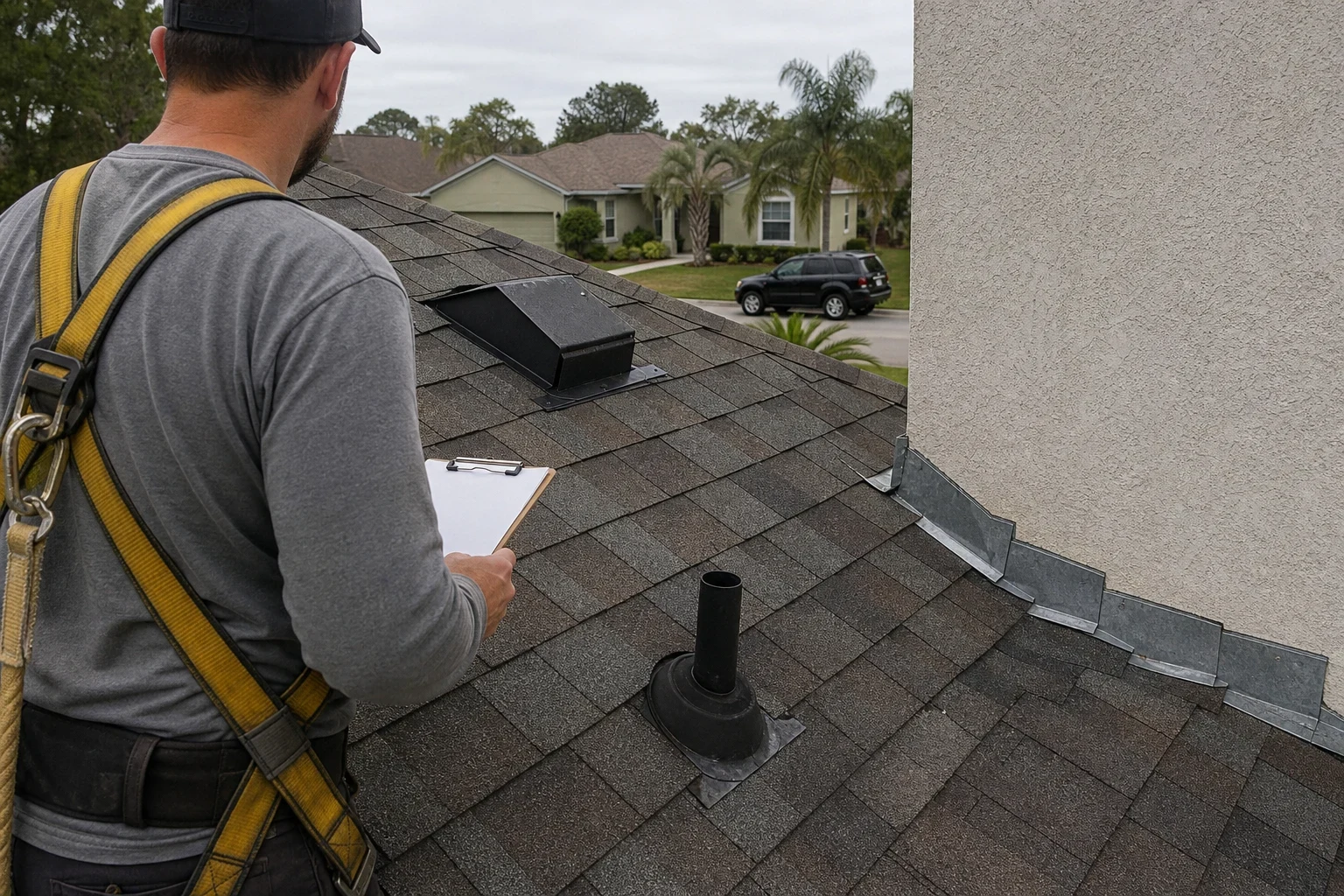
We get on your roof, go into your attic and check the parts that fail first: flashing, fasteners, vents and decking. You get photos and a plain answer on what's sound, what's wearing and what Florida code will ask of the next repair.
Why Have Your Roof Checked
Roof problems rarely announce themselves. A shingle tab that lifted in the last blow, a nail head rusting at the drip edge, a split rubber boot around a plumbing pipe. None of that shows from the driveway. Up in the attic, though, there may be a dark ring on the plywood that has been spreading for a couple of summers.
Book an inspection before you buy or sell a house, after a named storm, when your insurer asks how old the roof is, or when the roof is past 15 years and nobody has looked at it. It's also where roof repair or roof replacement should start, so you know what you're paying for.
We look at the roof the way a building inspector would. Florida has strict rules on underlayment, nailing and how much of a roof can be patched before the rest has to meet current code. We tell you where your roof stands on those rules so the next job holds no surprises.
What We Check on Every Inspection
- 01
Roof covering
We walk every slope we can safely reach. On shingles we look for granule loss, lifted or creased tabs and exposed nails. On metal we check panel seams, screw washers and any rust starting at cut edges.
- 02
Flashing and penetrations
Water usually finds its way in where something breaks through the roof: chimneys, skylights, wall lines and vent pipes. We look at the metal pieces, the caulk around them and the rubber pipe boots, which bake, shrink and crack in strong sun.
- 03
Attic and decking
From inside the attic we look for stains, soft or delaminated plywood, daylight at nail holes and signs of past leaks. We also check that air moves through the attic the way it should, since trapped heat shortens shingle life.
- 04
Edges and drainage
We look at drip edge, fascia and how water leaves the roof. If your gutters are pulling loose or spilling over, we note it, and our gutters service can handle it.
- 05
Code notes
We flag anything that wouldn't pass under current Florida code, like a missing secondary water barrier or undersized fasteners, and explain whether it matters now or only at the next reroof.
Questions about Roof Inspections?
Call(904) 822-0790When an Inspection Makes Sense
Marks on a ceiling
A brown ring overhead, even one that's dry and years old, means water made it through at some point. We track down whether that opening was ever closed.
Shingle grit in the gutters
Granules protect shingles from the sun. When you see a lot of them washing out, the shingles are aging fast.
A storm just came through
Strong gusts can pop the sealant strip that glues a shingle down, and the shingle stays on the roof. It settles back and looks fine from the yard, but nothing is holding it for the next blow. We offer free post-storm inspections to catch exactly this.
Your insurer is asking
Plenty of carriers want a roof's age and condition at renewal. A clear inspection with photos gives you something real to answer with.
You're buying or selling
Checking the roof before closing lets you price the house honestly instead of finding out after the papers are signed.
Rust or salt build-up on metal parts
Close to the ocean, salt air works on exposed fasteners, vents and flashing. Rust streaks are an early warning worth checking.
How the Inspection Goes
- 1
A short phone talk first
Tell us how old the roof is, whether it has leaked before and what made you want it looked at. Then we pick a day and time that works for you.
- 2
Outside and up top
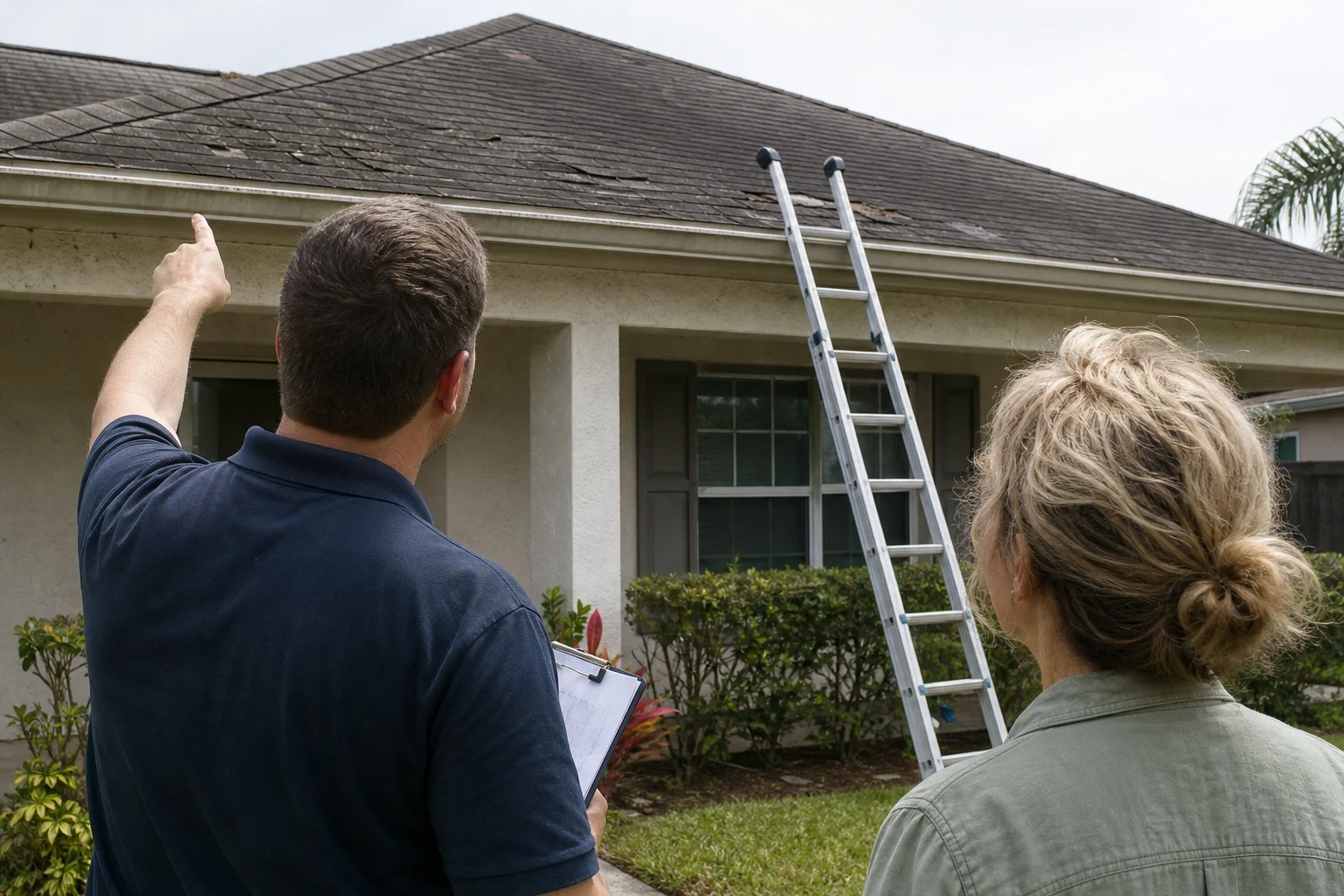
We set ladders carefully, walk the roof where it's safe to walk and photograph what we find. On steep or fragile roofs we inspect from the ladder and edges instead of risking damage.
- 3
Inside the attic
We check the underside of the decking, the vents and the insulation line. This part often tells us more than the shingles do.
- 4
Plain answers before we leave
We go over the photos with you. You hear what's fine, what needs work soon and what can wait. If repair makes sense, we give you a free, no-obligation estimate, and we won't push a new roof when a fix will hold.
What Sets the Inspection Price
Post-storm checks are free, and so is the estimate if your roof needs work. Other inspections, like a detailed report for a home sale, are priced by the roof itself. We'll tell you by phone what to expect before we send anyone out.
- Size and shape of the roof
- Each valley, dormer and wall joint is another spot we check by hand. A simple two-sided roof is faster than one with many angles.
- Steepness and getting in
- Steep pitches and two-story homes call for more setup and safety equipment. Cramped or low attics are slower to work through.
- Type of roof
- Shingle, metal and tile each fail in their own places, and each has its own rules for whether it can be walked on.
- How much detail you need
- A fast post-storm look isn't the same as a full written report with photos for a buyer, seller or insurance company.
Common Roof Inspection Questions
How long does an inspection take?
Most roofs take about an hour. Large or steep ones take longer, and the attic adds time. We never skip the attic, because that's where real problems often show up.
Should I be home for it?
It's useful, mainly so we can get into the attic and go over the photos with you on the spot. If you're away, we check the outside and walk you through our findings by phone.
Are you going to push a new roof?
Only if the roof truly calls for one. Often the fix is minor: new vent boots, resealed flashing or a few replacement shingles. When a roof really is finished, we show you the proof, explain it and let you decide.
Will an inspection help with an insurance claim?
Yes, it can. We record damage with dated photos and clear notes. On a storm damage claim, we work with your insurance adjuster directly. Coverage is the adjuster's decision, but we make sure they see all we found.
Why does Florida code matter for an inspection?
Any work done on your roof has to meet current code, and that code can decide whether a patch is allowed or the repair must be larger. We flag code issues early so a repair's permit and final inspection go the way you expect.
Can you inspect a metal roof?
Yes. We look at fasteners and seams, panel movement and any rust. If you're considering a switch to metal, see our metal roofing page.
Know What's Going On Up There
An hour on your roof and in your attic gets you real answers and photos to keep. If you're near Jacksonville Beach, Atlantic Beach or Neptune Beach, give us a ring. Financing is available if the roof needs work.