ServicesMetal Roofing
Metal Roofing in Jacksonville Beach
We install standing seam and 5V crimp metal roofs on your home, from tear-off to final inspection. We pull the permit and explain each code item in plain words. You get a roof built to hold in high wind and shed hard rain.
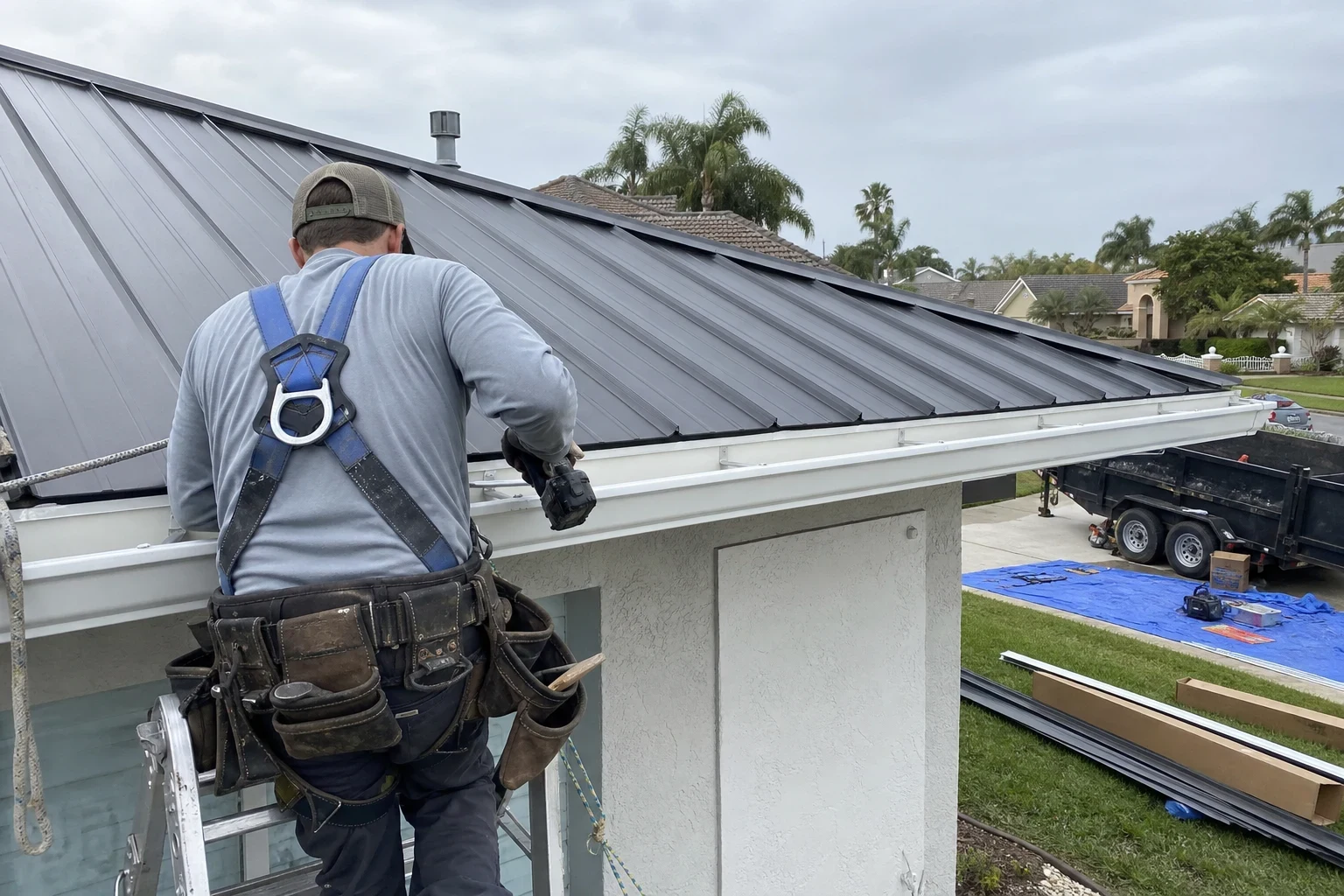
When a Metal Roof Makes Sense
A metal roof costs more up front than shingles. It also lasts a long time, handles wind well and reflects a good share of the summer sun. If you plan to stay in your home for years, it is often worth a look.
Near the ocean, the metal matters. Salt air eats at bare steel and cheap fasteners. We go over which panel material and coating fit how close you are to the water, and which screws and clips go with them.
It is not right for every house or budget. If your shingle roof still has good years left, we will say so. Sometimes a repair or a standard roof replacement is the better call, and we will give you the numbers for both.
What Comes With Every Metal Roof
Tear-off to the wood and deck check
The old roof comes off down to the decking. Soft or rotted boards are replaced before anything else, and we photograph the bad wood so you can see it for yourself.
Deck re-nailed to code
Wind code sets the spacing for fastening the deck. We re-nail to that spacing so the deck holds firm beneath the panels.
Underlayment made for metal
Metal gets hot and shifts. We lay a high-temperature underlayment that stands up under the panels and stops water if wind pushes rain past a seam.
Approved panels, fastened to the tested pattern
Each panel system we put on has the state product approval the building department requires. We fasten it to the exact tested pattern, with closer spacing at the edges and corners.
Trim, flashing and pipes
Chimneys, walls and vent pipes get the right boots and flashing. Eave and ridge trim are set so wind can't get beneath them.
Permit, inspection and cleanup each day
We file the permit before work begins, and a crew member is there when the building inspector visits. Each work day ends with a magnet sweep of the yard and driveway for loose screws and metal shavings.
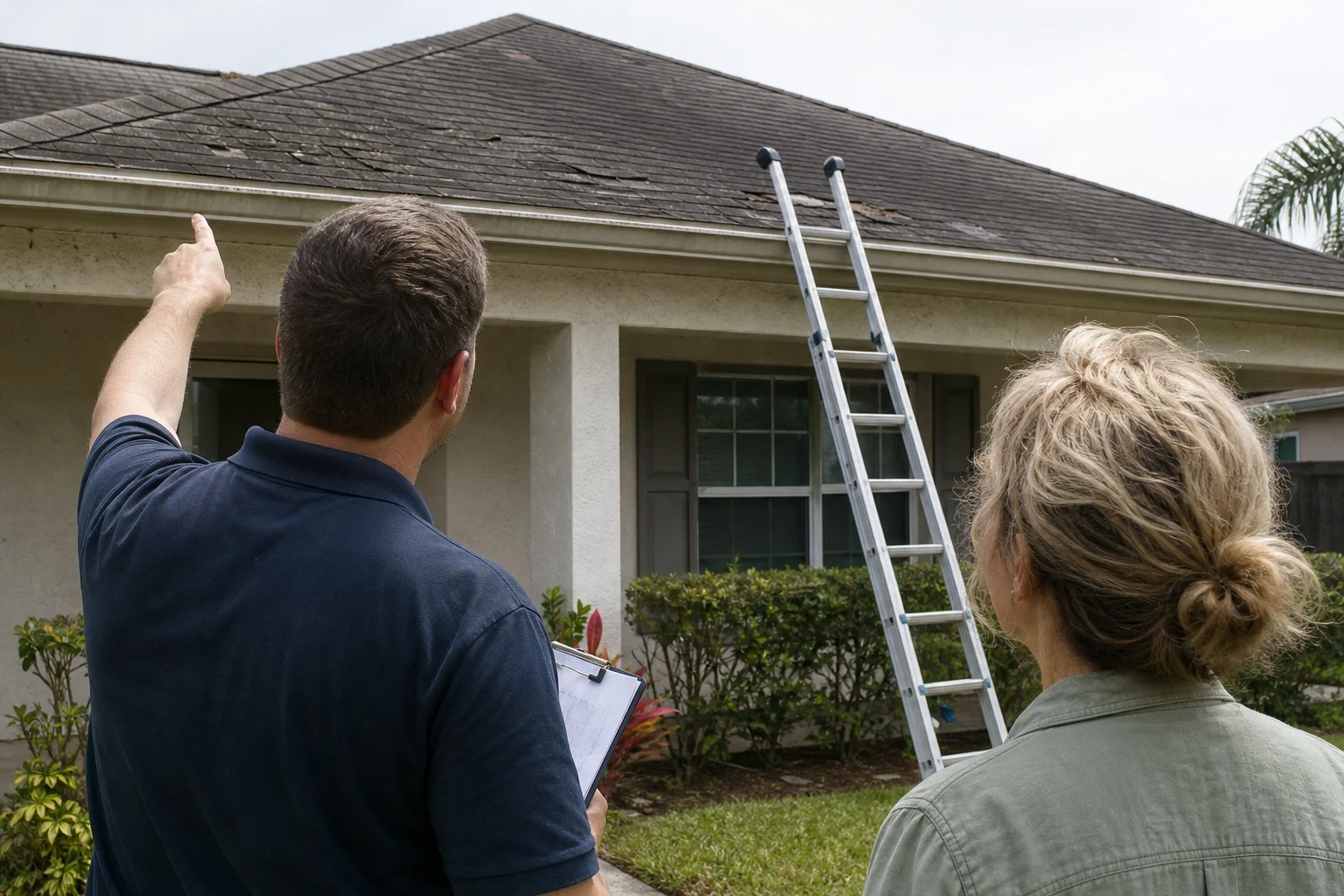
Signs It May Be Time for Metal
- Your shingle roof is near the end
- Curling, bald spots and granules in the gutters mean the roof is wearing out. That is a good moment to compare metal with another shingle roof.
- You have patched the same spots again and again
- Repeat leaks after storms usually mean the roof is tired, not unlucky.
- Wind keeps lifting shingles
- If you find tabs in the yard after every blow, a fastened metal system may hold better.
- Rust on an older metal roof
- Rusted screws, loose panels or worn washers on an old 5V roof can let water in. We check whether it can be repaired or should be redone.
- Your attic runs hot
- A reflective metal finish with good ventilation can cut heat coming through the roof.
How a Metal Roof Job Runs
- 1
Free estimate on site
We look at the roof, the attic and the deck from below. You get a written, line-item estimate that names the panel, the coating and the fasteners.
- 2
Paperwork and ordering
We file the permit with the product approvals attached. Panels are ordered to your roof's measurements, so lead time can run a few weeks.
- 3
Tear-off and dry-in
We remove the old roof, fix the deck, re-nail it and lay underlayment the same day. Your home is not left open overnight.
- 4
Panels, trim and inspection
Panels and trim go on, then flashing at every pipe and wall. We schedule the final inspection and walk the finished roof with you.
What Moves the Price
Metal roof prices swing more than shingle prices do. The panel type alone makes a big difference. Each part gets its own line in our written estimate, so nothing is lumped together. If paying all at once is hard, financing is available.
- Standing seam or 5V crimp
- Standing seam hides its fasteners and takes more labor. 5V crimp uses exposed screws and costs less.
- Panel material
- Galvalume steel, aluminum and the coating on top are priced differently. Homes close to the beach may need aluminum or a heavier coating.
- Roof shape and pitch
- Valleys, hips, dormers and steep slopes mean more cuts, more trim and slower work.
- Deck condition
- We cannot see every board until the old roof is off. Any replaced decking is priced per sheet in the estimate, so there is no guessing later.
- Code items and fees
- Permit fees, re-nailing and edge fastening are part of every job. We list them so they are not a surprise.
Metal Roofing Questions
- Is a metal roof loud in the rain?
- Not on a house. The panels are fastened over solid plywood with underlayment in between, and that layer takes up most of the drumming. Inside, a steady rain sounds close to what you hear under shingles today. The noisy metal roofs most folks recall sit on bare rafters with nothing beneath, like a barn or a shed.
- Will a metal roof rust near the ocean?
- It can if the wrong metal or screws are used. We match the panel material, coating and fasteners to how much salt air your home gets. Rinsing the roof now and then helps too.
- Can you put metal over my old shingles?
- We tear off down to the deck. That lets us find rot, re-nail the deck to current wind code and give the inspector a clean look. It costs a bit more but you know what is under your roof.
- Does a metal roof attract lightning?
- No. Metal does not draw lightning any more than other roofs. If lightning strikes, a metal roof will not catch fire the way wood can.
- How long does the install take?
- Most homes take several work days once panels arrive, depending on size and shape. Weather can push dates. We keep the roof dried in every night and tell you if the schedule shifts.
- What does the inspector look at?
- Inspectors check deck nailing, the underlayment and that the panels match their product approval and fastening pattern. We are there for it and explain any notes they leave.
Thinking About Metal for Your Home
We will look at your roof and lay out metal options next to a standard roof. You will see each panel and code item explained in plain words before you decide.