How Do I Know If My Jacksonville Beach Roof Needs Repair?
Most roof problems give you a warning before they turn into a leak, and you can spot many of them without a ladder.
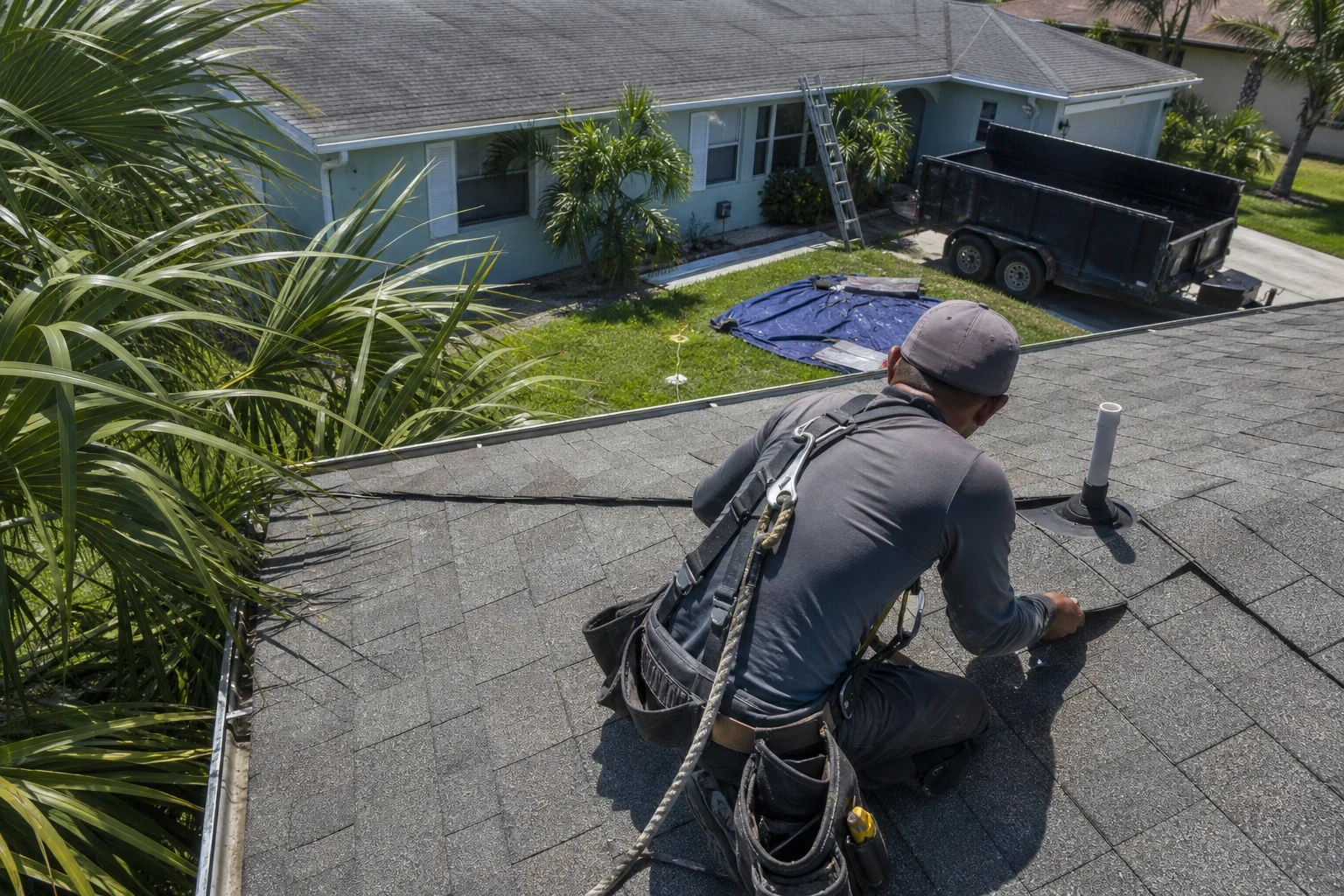
How to know if a roof needs repair?
Your roof likely needs repair if you see ceiling stains, missing or lifted shingles, loose flashing, piles of granules in the gutters or soft spots on the roof deck. One small sign may be minor. Several together, or any active leak, means it is time for a close look. Get a free estimate by phone at (904) 822-0790.
What signs can you spot from the ground?
Walk around your home on a clear morning and look up. Low sun makes lifted edges and dents easier to see. Use binoculars if you have them. Stay off the roof.
Look for shingles that are missing, curled at the corners or a different color than the ones around them. A patch of darker shingles often means the granules have worn off and the asphalt is taking direct sun. Near the coast, wind lifts shingle tabs and breaks the seal strip underneath. A tab can look flat and still be loose.
Then check the metal. Flashing runs around chimneys, vents and walls where the roof meets the house. Salt air corrodes fasteners and exposed metal faster here than inland, so rust stains or gaps at flashing deserve attention.
- Missing, cracked or curled shingles
- Shingles that look darker or bare in spots
- Bent, rusted or pulled-back flashing
- A roofline that dips or sags between rafters
- Granules collecting at gutter downspouts
- Cracked rubber boots around plumbing vents
What should you check inside your home?
The attic tells you more than the roof surface does. Go up with a flashlight after a heavy rain. Look for damp wood, dark rings on the underside of the deck, wet insulation or daylight coming through where it should not.
In the living space, watch for brown stains on ceilings, paint bubbling near the top of walls and a musty smell in closets on outside walls. Stains near a bathroom or kitchen vent usually point to a failed vent boot. Stains near a wall often point to flashing. Our summer afternoon storms push water sideways, so a leak can show up a few feet from where it gets in.
Which signs look bad but usually are not urgent?
Black or green streaks on shingles are usually algae. It thrives in our humid air. It looks rough, but on its own it does not mean the roof is leaking. A gentle low-pressure cleaning handles it. Never pressure wash shingles, because that strips the granules.
A small amount of granules in the gutters on a new roof is normal for the first year. Loose excess washes off. Heavy piles on an older roof are a different story and usually mean the shingles are near the end of their life.
A single nail that has backed out and lifted a shingle is a small fix. Left alone, though, it opens a hole for water. Small problems are cheap to fix early and expensive to ignore.
When does a repair need a permit, and when is replacement the better answer?
Many roof repairs in Jacksonville Beach need a permit from the city building department, especially when decking or a section of roofing is replaced. When a permit is required, we pull it and schedule the inspection. That protects you when you sell your home or file an insurance claim, because the work is on record and was checked.
Florida's building code also limits how much of a roof section can be repaired before the whole section has to be brought up to current code. In general, if repairs cover more than 25 percent of a roof section within a 12-month period, that section has to be redone to today's standards. Roofs built under the 2007 code or later get some relief from that rule. We tell you plainly which side of that line your job falls on before any work starts.
Replacement starts to make sense when damage is spread across the roof, the deck is soft in several places or the shingles are worn out everywhere. If a repair will buy you real years, we say so. If it will not, we say that too, and explain what roof replacement would involve.
What happens when you call us?
We set a time to come out and look at the roof and the attic. We take photos of what we find and show them to you, so you see the same thing we see.
You get a written estimate that lists the repair, the materials and whether a permit is needed. There is no charge for the estimate and no obligation. Financing is available if you need it.
- We inspect the roof surface, flashing, vents and attic
- We photograph each problem area
- You get a written estimate with permit needs noted
- We do the repair, pass inspection if required and clean up
More questions about roof repair
- Should I climb on the roof to check it myself?
- We would rather you did not. Shingles get slick with morning dew and fall injuries are common. The ground, binoculars and the attic will tell you most of what you need to know.
- What should I do after a hurricane or tropical storm?
- Take photos of any damage you can see from the ground and inside your home, then call us for a free post-storm inspection. Wind damage is often hard to see, and having it documented early helps with an insurance claim.
- Will my insurance pay for the repair?
- It depends on the cause. Storm damage is often covered, while normal wear usually is not. On storm damage claims, we work directly with your insurance adjuster and show them what we found, but the adjuster makes the coverage decision.
- How often should I have my roof looked at?
- Once a year is a good habit, plus after any major storm. A roof inspection before hurricane season catches loose shingles and flashing while they are still small fixes.
Not sure what you are seeing up there?
We will look at your roof and attic, show you photos of what we find and give you a written estimate that says whether a permit is needed. The estimate is free and comes with no obligation.